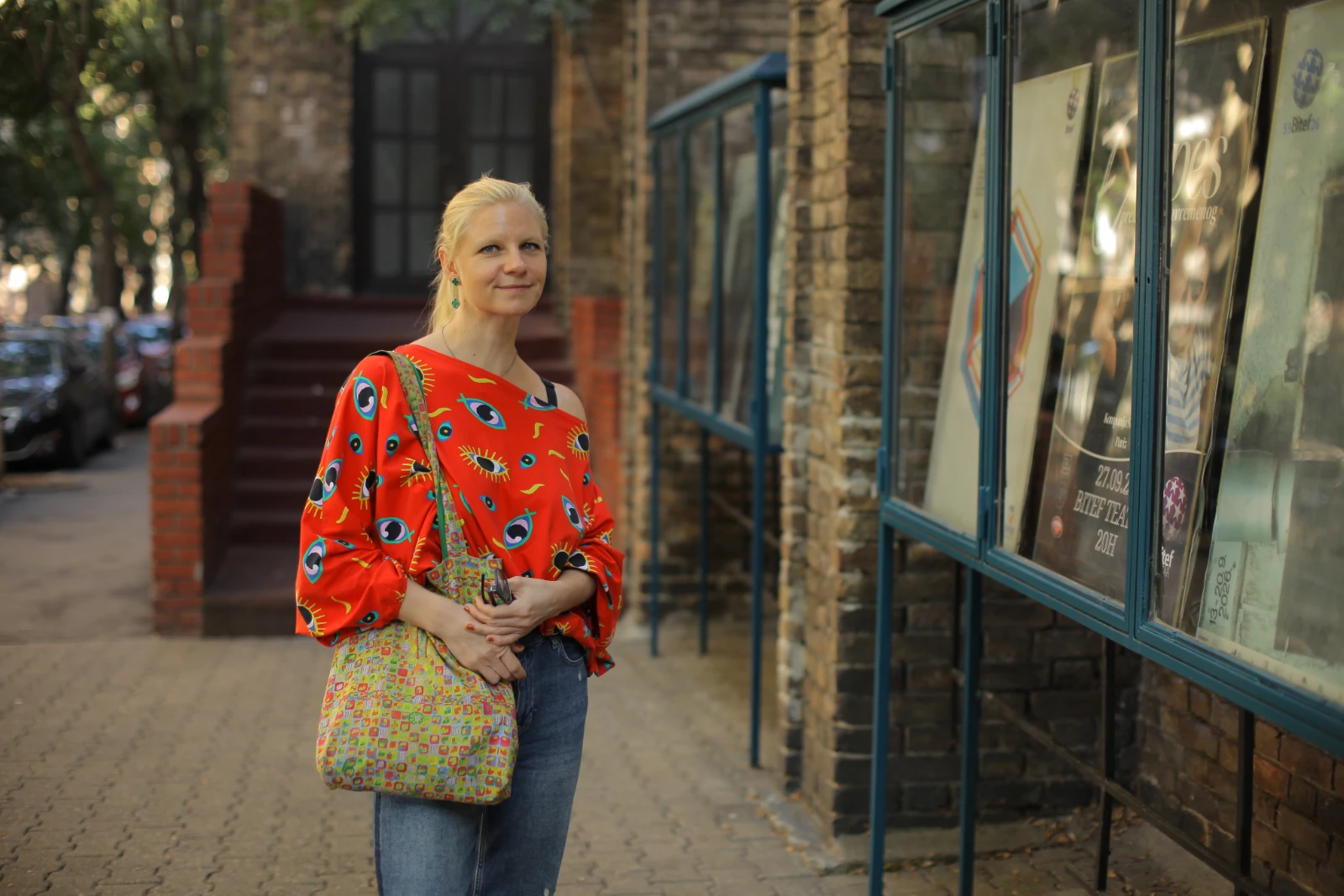
- You got your Serbian residence permit before the wedding, on the basis of a non-marital union. How did you arrange it?
- Anya: My company relocated me, so I got my residence permit through work, and Nikita got his through family reunification. In Serbia you don't have to be married for that: you can confirm that you are in a non-marital union. In Serbian it is called "vanbračna zajednica".The couple's names have been changed at their request
- We were asked for certificates from the Russian civil registry office (ZAGS) confirming that neither of us was married to anyone else. We also had to confirm our relationship before a Serbian notary in the presence of two witnesses. In our case these were the company's lawyers, who were helping us with the paperwork.
- Nikita: At the notary we confirmed that we live together even though we are not officially married. Nobody asked us for joint photos or any other proof of the relationship. Keep in mind, though, that Anya's company handled almost all the legal matters, so we didn't dig too deeply into the procedure.
- Where did you register your marriage and what did you need for it?
- Anya: We decided to register the marriage through the Russian consulate in Belgrade. We wanted to get married in summer, on a specific date.
- At first we tried to book an appointment ourselves, but there is an electronic queue: you have to check periodically how it is moving and wait for a free slot. When I joined the queue, there were at least 50 people ahead of us. We estimated the wait at about two months, with no guarantee of getting the date we wanted. You might count on June and your turn comes in May, or the other way round.
- We used the services of Consul Prime. With their help we were able to choose a date and filled in almost nothing ourselves. We came to the consulate with our passports to submit the application, and then again for the registration itself. I think the assistance cost about 100 euros. I remember we brought both our Russian internal passports and our international ones.Consul Prime is an intermediary that helps book consulate appointments
- Registration day was funny: we arrived at the consulate as a whole group, in our wedding outfits, while the people around us were dealing with everyday business: drawing up a power of attorney, registering a newborn baby. And we had come to get married.
Marriage registration
- Nikita: We were told we could bring a maximum of four guests, but we came with six. In the end everyone was let in.
- The celebration itself was held separately. First we signed the papers at the consulate. The next morning we had a sunrise photo shoot and walked around Belgrade. A day or two later we celebrated the wedding with our guests.
- You planned the wedding yourselves. Why did you decide not to hire a planner?
- Nikita: At first we considered celebrating in another country. In that case it probably would have been hard without a planner. But then we dropped the idea. When you plan a wedding remotely, it's hard to picture how everything will look. We were already living in Serbia, so we could go and see the venue ourselves, meet the vendors, and agree on everything.
- At that point we didn't know any planners we could trust with the whole thing. Then we realised that while we were figuring out which tasks we could delegate, we were already getting them done. We made a list of everything we wanted at the wedding: venue, catering, decor, equipment, flowers — and gradually ticked off every item.
- Anya: By the way, during the whole preparation we didn't have a single argument!
- How long did the preparations take you?
- Nikita: We started looking for a venue 8 months before the wedding, and six months before we had already signed the contract. That doesn't mean we spent every day of those two months searching, though. Sometimes we did nothing at all for 2–3 weeks.
- Anya: About six months before, we started discussing decor and catering and looking for vendors. And 3–4 months before, the preparations became much more intense: we had to choose a dress, plan our parents' and friends' arrival, and make arrangements with everyone.
- How did you choose the venue?
- Nikita: We were looking for a place that would be comfortable for both 20 and 50 guests. Most of our loved ones live in Russia, so it was hard to know in advance how many people would be able to come.
- At first we considered practically everything: parks, restaurants, banquet halls. About half of the places didn't even reply to us. We ruled out a park because too much would depend on the weather and we would have less control over the situation.
- Then we found a website listing houses for events. There were options of different capacity and price: 300, 500, 700 euros a night. We picked two houses and went to see them.
- Anya: The first house we saw was by a river. When we arrived, the owners were having a family party. They welcomed us, invited us to the table and we discussed everything. It was very pleasant, but the house didn't suit us. It could hold a maximum of 15–20 guests, and we were counting on 30–50.
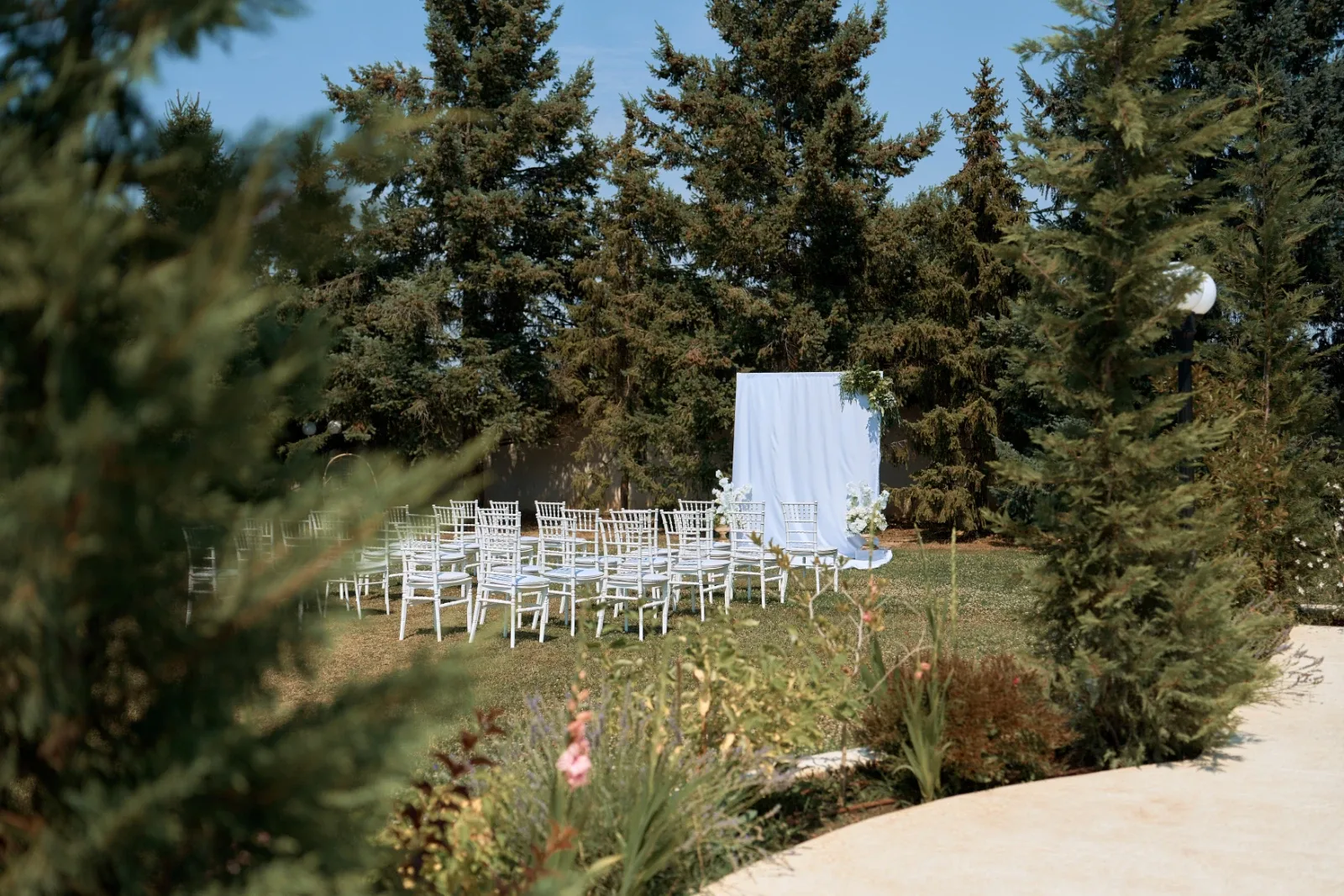
- How the ceremony would go was important to me. I wanted lots of greenery and sunshine around, and a wedding arch that I could walk up to in heels, arm in arm with my parents. The first house was a bit dark, the grounds seemed to sit in a ravine, with steps leading down. It would have been awkward in heels.
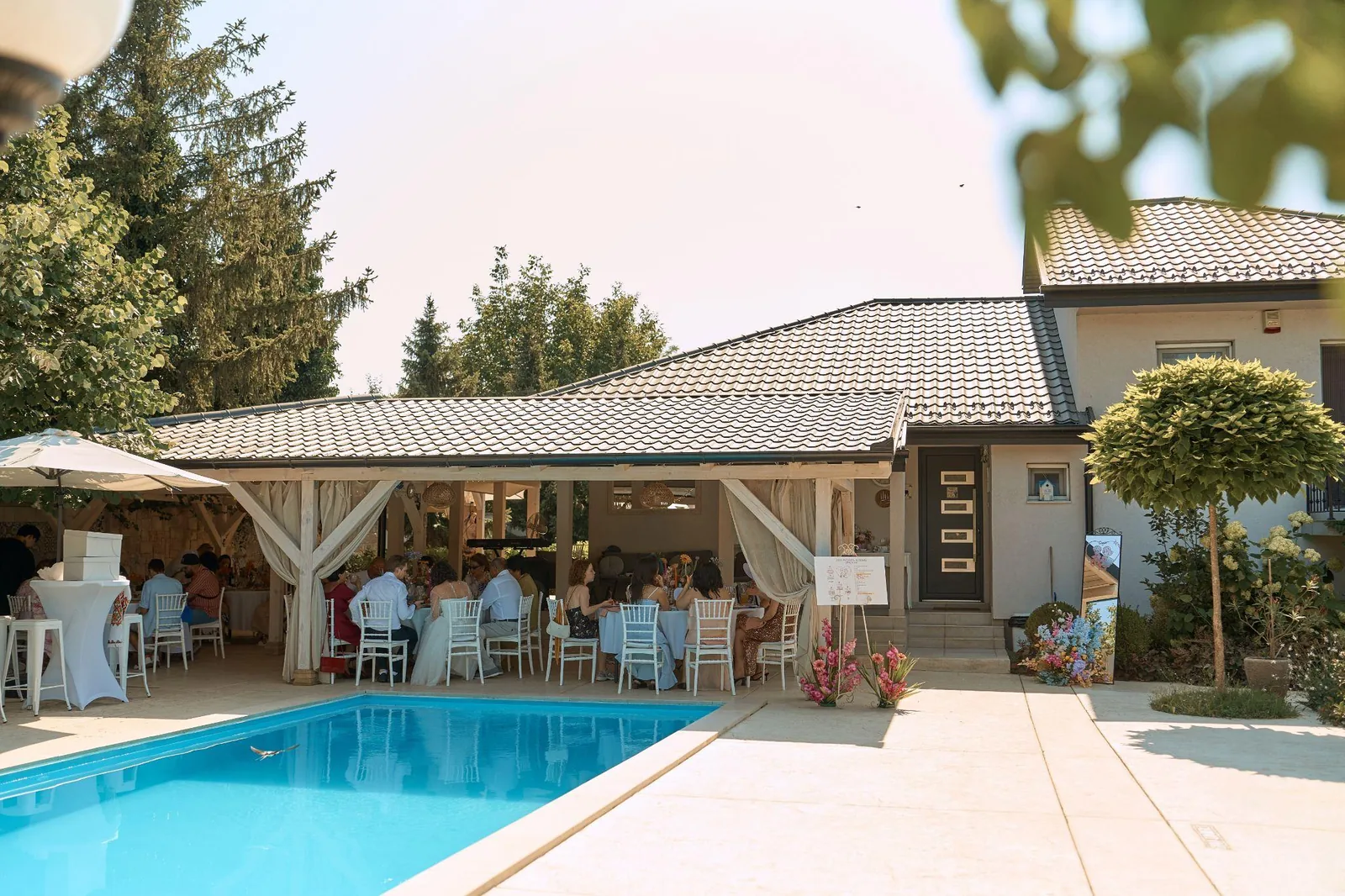
- At the second house everything came together. There was a large green area for the ceremony, a pool, a kitchen and a bar. The house turned out to be very well equipped for events: for example, it already had speakers and tableware. Later our catering manager said that venues with that set of amenities are rare.
- Admittedly, the house turned out to be one of the most expensive — 1,100 euros a day. We realised we could have saved almost half, but we liked it so much that we stopped looking.
- The only serious restriction was that noise was allowed only until 22:00. We were threatened with a large fine for breaking it.
- How did you decorate the venue?
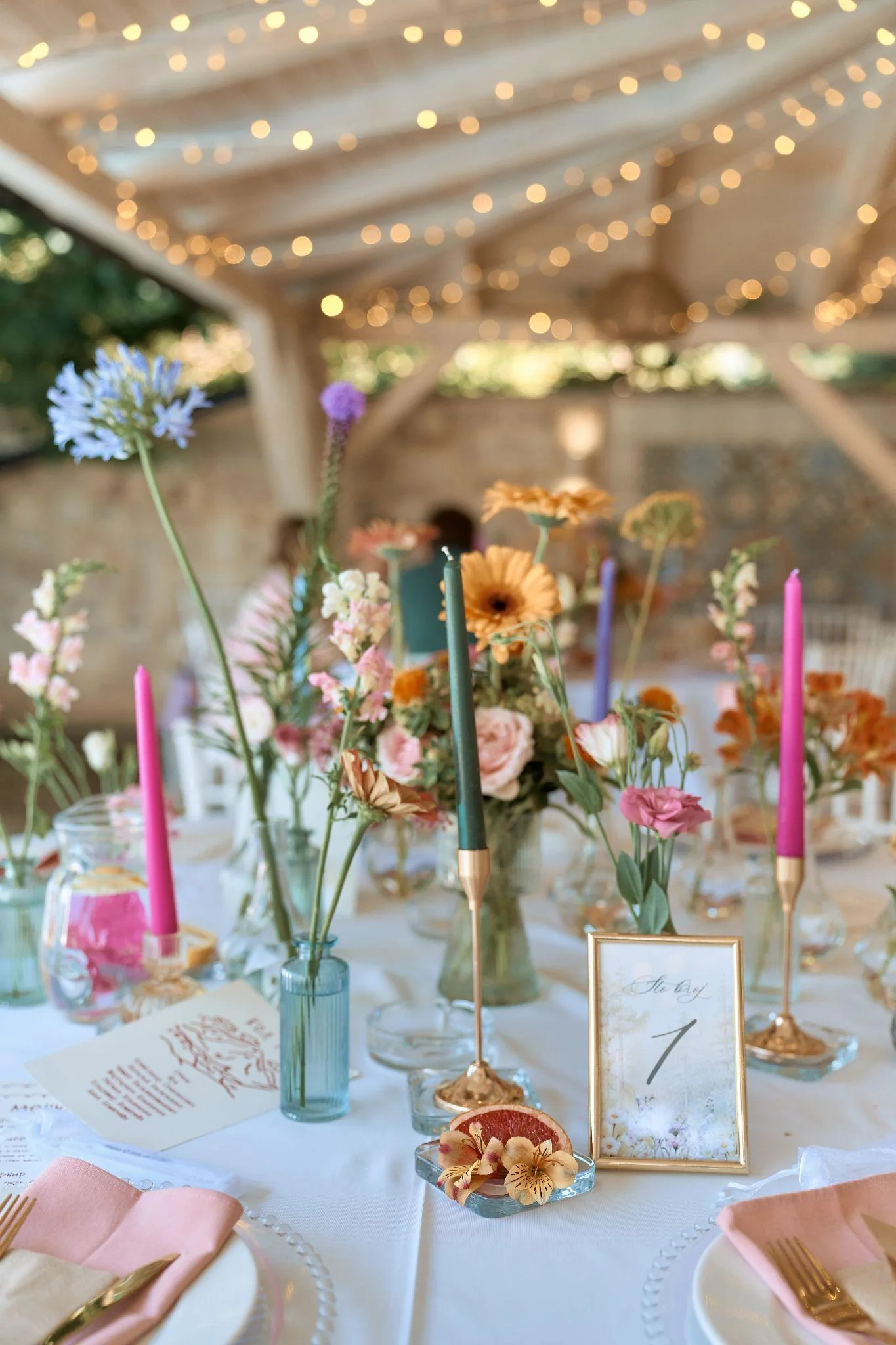
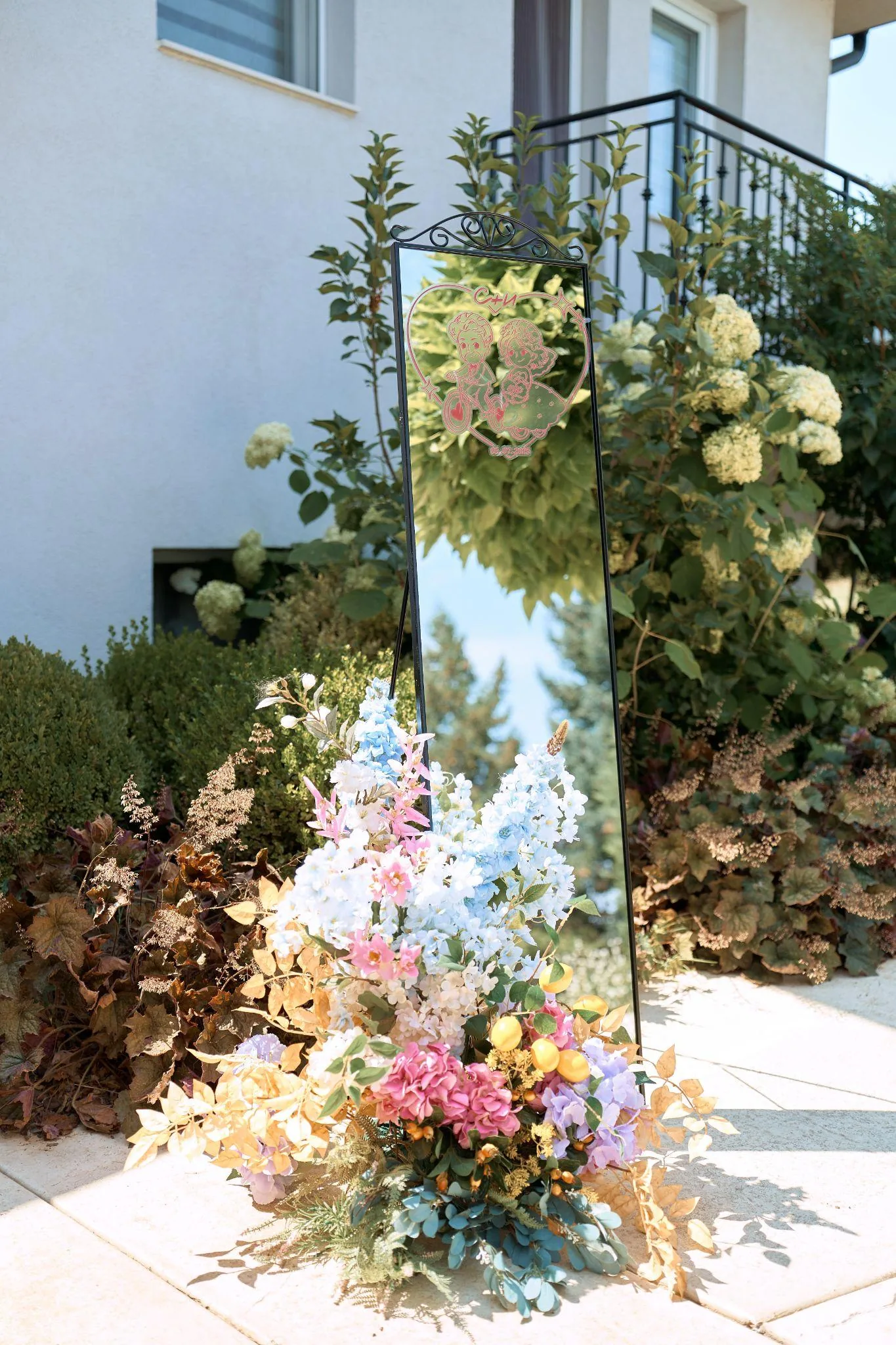
- Anya: The house owners offered decoration services. They knew their venue well: what could be moved or removed, where it was best to place things. The photos showed they had a lot of experience, so we agreed.
- I think the decoration cost about 350–400 euros. I'm very glad we ordered it. Everything turned out just the way I wanted.
- Nikita: We thought about doing the decor ourselves. It would have been cheaper, but I can't imagine what state we would have been in to greet the guests afterwards.
- How did you choose the menu and calculate the amount of food and drink so that there was enough for everyone but nothing went to waste?
- Nikita: We looked at various catering options, including Serbian ones. But the menus we came across had a lot of sausages, ćevapi, cold cuts and buns. We wanted something more interesting.
- Ćevapi are skinless minced-meat sausages cooked on a grill
- In the end we chose Sasha — she was recommended to us by friends. She had experience working at events and knew which dishes hold up in the heat and what guests usually like. So we trusted her choice.
- We ordered the drinks separately. The house owners gave us the supplier's contacts; they work with him all the time. We sent a list, and everything was delivered straight to the venue.
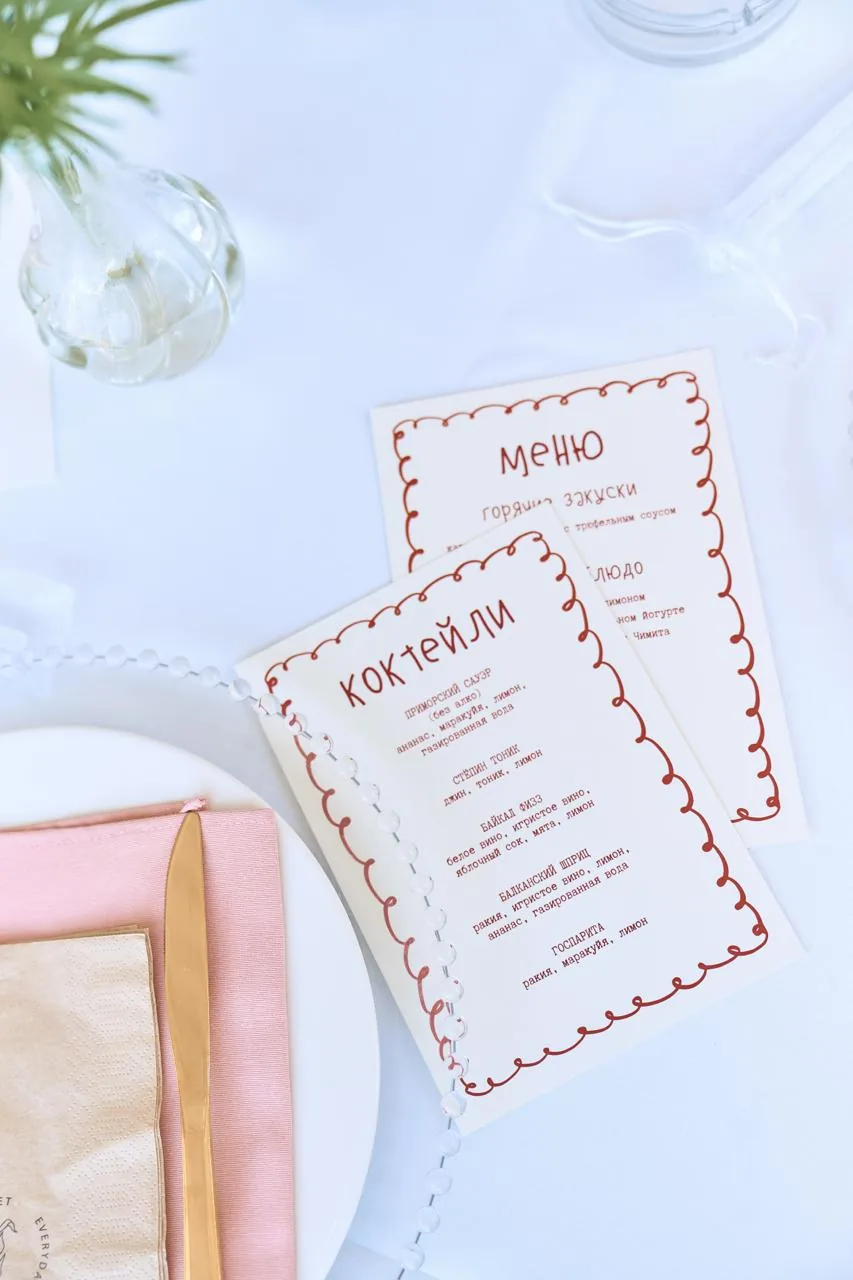
- The bartender drew up a cocktail menu and a list of ingredients in advance. Some things we bought ourselves — we even went to Metro for fruit purée for the cocktails.
- Anya: We agreed on the menu like this: first we decided how many hot dishes, salads and appetisers there would be, and Sasha proposed the specific options herself. We wanted fish, chicken and definitely vegetarian dishes, because Nikita is a vegetarian. We also asked her to make buuzy. We brought them frozen, and the cooks prepared them right at the venue.
- Buuzy are a Buryat dish of dough with a meat filling, cooked by steaming
- The hardest thing was calculating the amount of food. Most of our loved ones live in Russia, so until the very end we didn't know how many guests there would be. Some 10–15 people couldn't say for sure whether they were coming until almost the day of the wedding. In the end they didn't come, although we had already budgeted food and drink for them. We literally had to reduce the order right before the wedding. In total about 30 people came: our parents and friends from Russia and Serbia.
- We tried not to overdo it with the food. We were planning to leave soon and didn't want mountains of leftovers after the wedding. Nikita's dad, though, favoured the opposite approach: he wanted plenty of food left over and had even stocked up on a pile of containers and bags in advance. But Sasha calculated everything well. We took some of the food home, and the guests took some with them.
- Drinks were easier, because the supplier had a convenient payment system: first you pay part of the amount, and the day after the celebration their staff come, collect all the unopened bottles and recalculate the order. In the end you pay only for what you used.
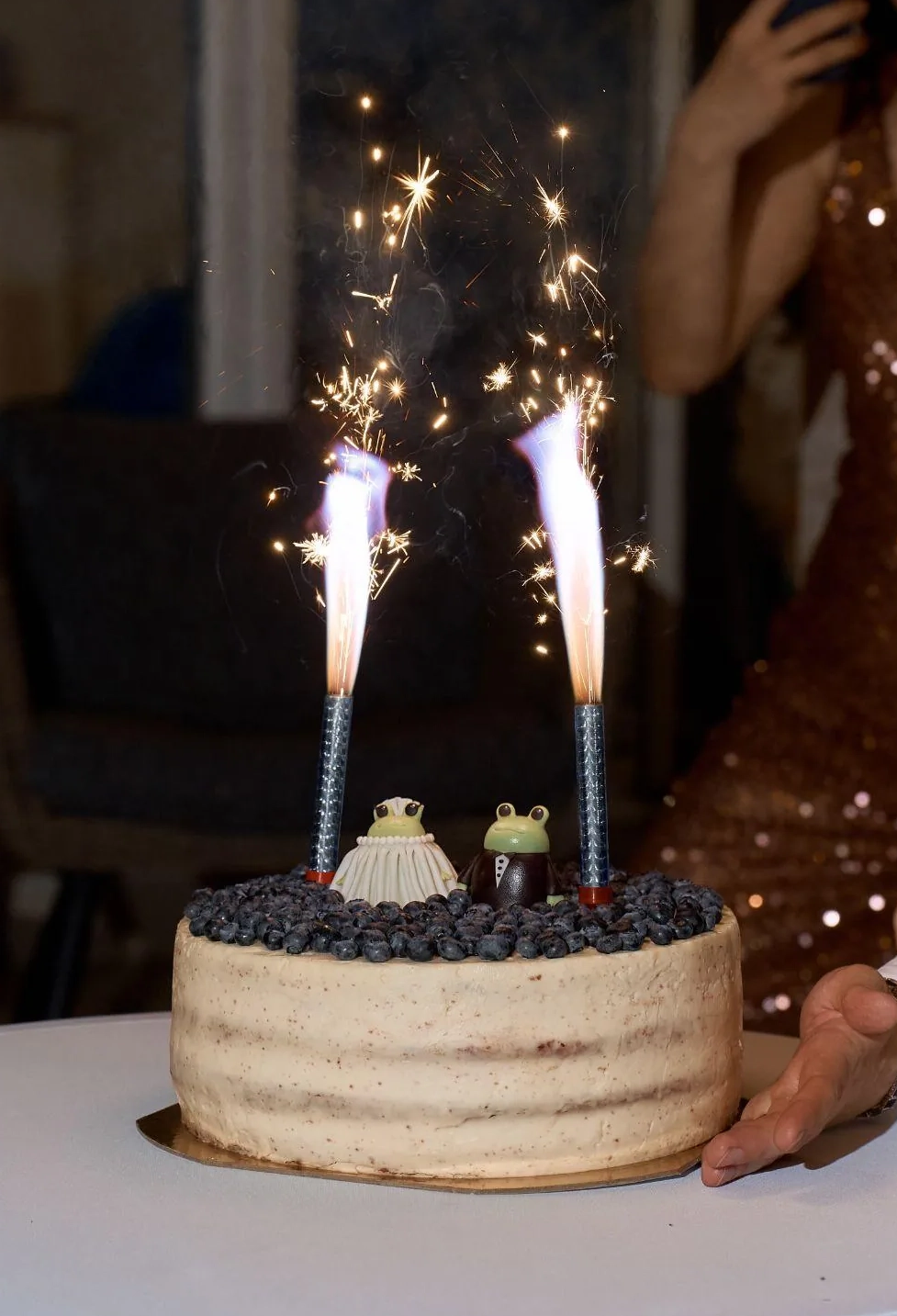
- Initially we agreed on 135 thousand dinars. That amount included the food, the cooking and the cake. Sasha found us the pastry chef. He made a cake with frog figurines. It turned out very beautiful. We paid the waiters separately. Sasha suggested them too.Rakija is a traditional Balkan strong spirit made from fruit
- How did you choose your wedding outfits?
- Anya: First I found a very beautiful atelier on Instagram. In the photos everything looked straight out of Pinterest. I booked a fitting. I liked everything so much that I had already set my mind on buying the dress. Then I decided to show Nikita the photos. And it's a good thing I did: he said the dress didn't suit me. That atelier made dresses to order, and it cost about 800 euros.
- After that I made a map of bridal salons where I liked the dresses at least in the photos. And we started going to fittings.
- It was hard for me to find the right style: I wanted something minimalist, while Serbian salons had a lot of voluminous dresses with lots of details. I found my dress in a Russian-speaking atelier in Novi Sad. It was the only place where three options suited me at once. We chose between them.
- I rented the dress for 800 euros together with the veil and a cape. Delivery wasn't included in the price: I had to pick up the outfit myself on the wedding day and return it the next day. The dress was also shortened to my height. I still don't understand how they then alter it for the next brides if they are taller than me.
- Nikita: I think for 800 euros they could at least have arranged a taxi.
- My outfit was simpler. I bought the trousers on sale at Massimo Dutti, and the shirt was made to order at the atelier "Moj krajač". I chose the fabric, the collar shape, the cuffs and other details. They even put my initials on the shirt. Before sewing they measured me carefully and asked which wrist I wear my watch on, so they could make that sleeve slightly wider. Then they invited me for a fitting to adjust the shirt if needed. It cost about 100–120 euros. I don't know if I'll ever wear it again, but it warms my heart that I have it.
- I decided against a jacket. I don't like them, and in a Serbian summer a shirt is the maximum, I think.
- Anya, who did your makeup and hair?
- Anya: I looked for a makeup artist on Instagram, but at first I didn't like how the salons communicated with clients: some had no proper portfolio, at others all the work looked very similar. It was important to me that the makeup artist could work with different types of faces. Also, I have sensitive skin, and not all cosmetics suit me.
- I asked a friend from Moscow who does makeup professionally to look at the portfolios of Belgrade makeup artists. That's how we found Masha. I sent her references in advance. At the makeup trial I had an allergic reaction to her foundation. Masha bought a different one that suited my skin.
- Masha also came at 3 a.m. to get me ready for the sunrise photo shoot we had after the registration. I think I paid her about 410 euros for the trial, the makeup for the photo shoot and for the wedding, but I don't remember exactly anymore.
- And what about the bouquet?
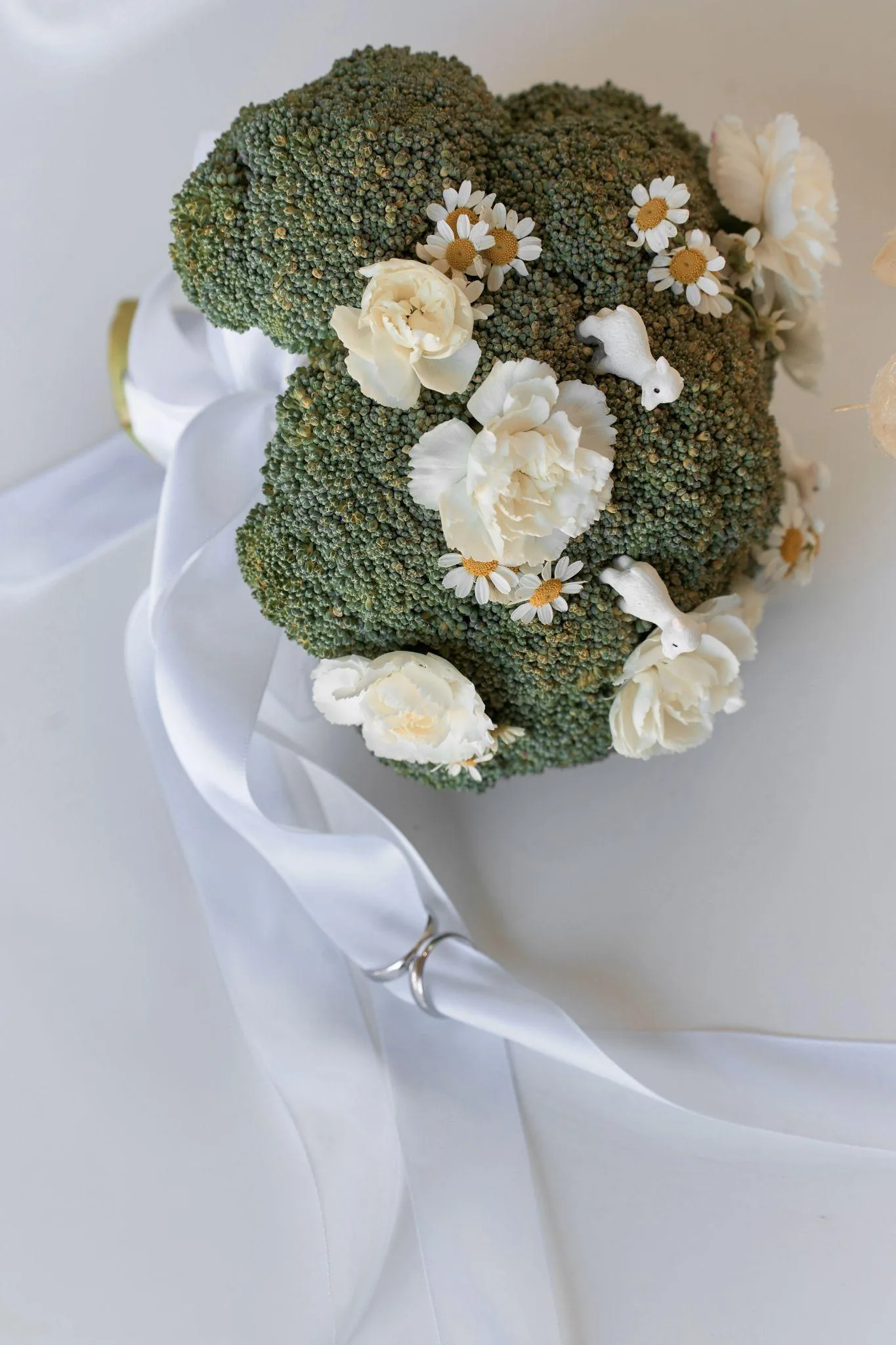
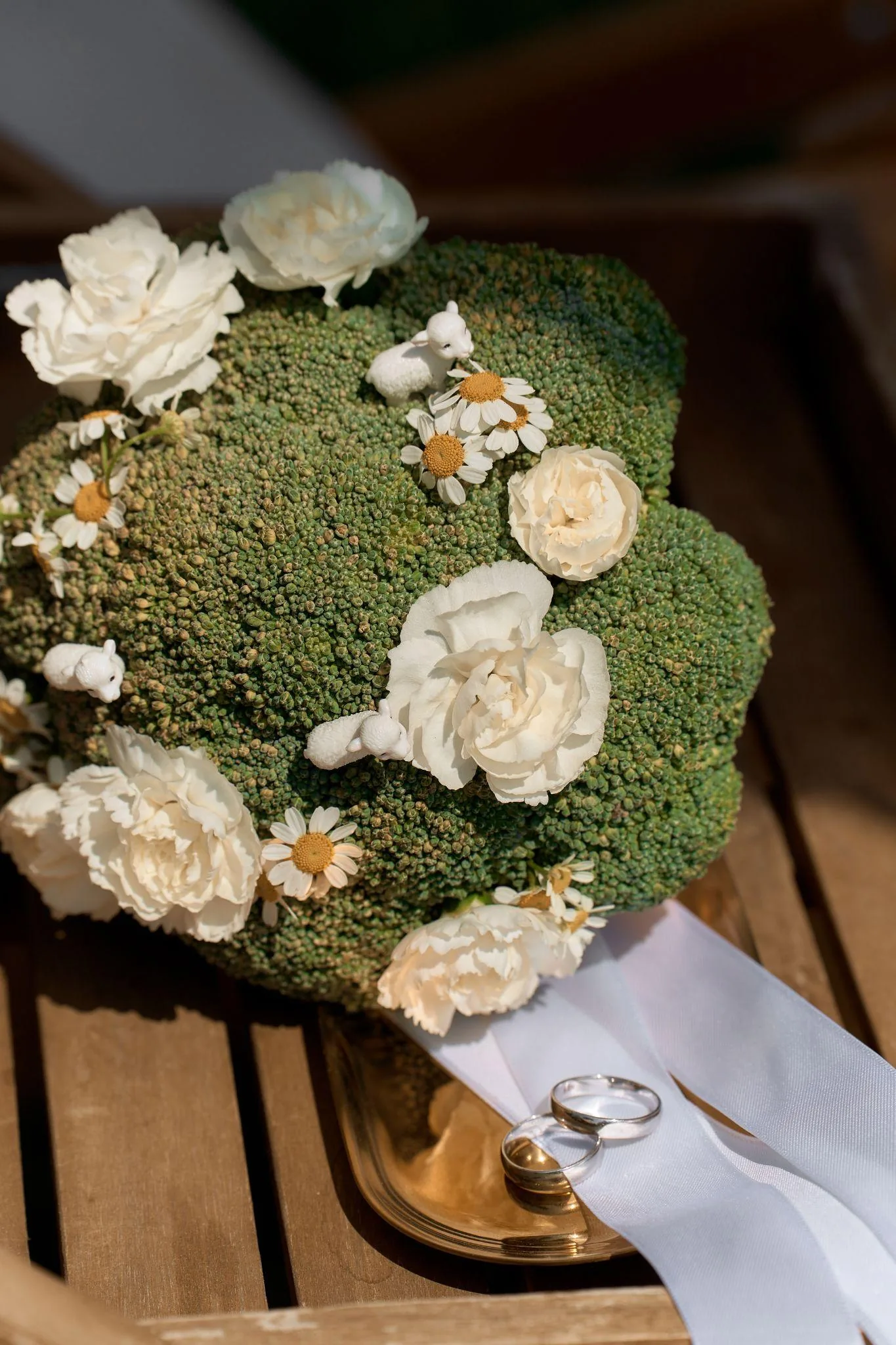
- I had a rather unusual idea. I wanted a bouquet of broccoli, small chrysanthemums and daisies. I also came up with the idea of adding little lamb figurines. I found a flower shop, brought the broccoli there, and the florists made the bouquet. They also made my bouquet for the registration. I liked that they immediately understood what I wanted.
- Who photographed you and how much did the wedding photography cost?
- Anya: To find a wedding photographer we posted a message in a Telegram chat: we gave the date and time of the wedding and asked photographers to send their price lists. We got 5–10 responses and looked at the portfolios and prices.
- We had two photographers: Lena shot the registration and the sunrise photo shoot, and the celebration was shot by another Masha together with her husband. Masha sent the first batch of photos a week later, and all the rest a month later. In total we received about 900 pictures.
- Nikita: The wedding photography cost 600 euros for the day.
- You held traditional ceremonies. Can you tell us about them?
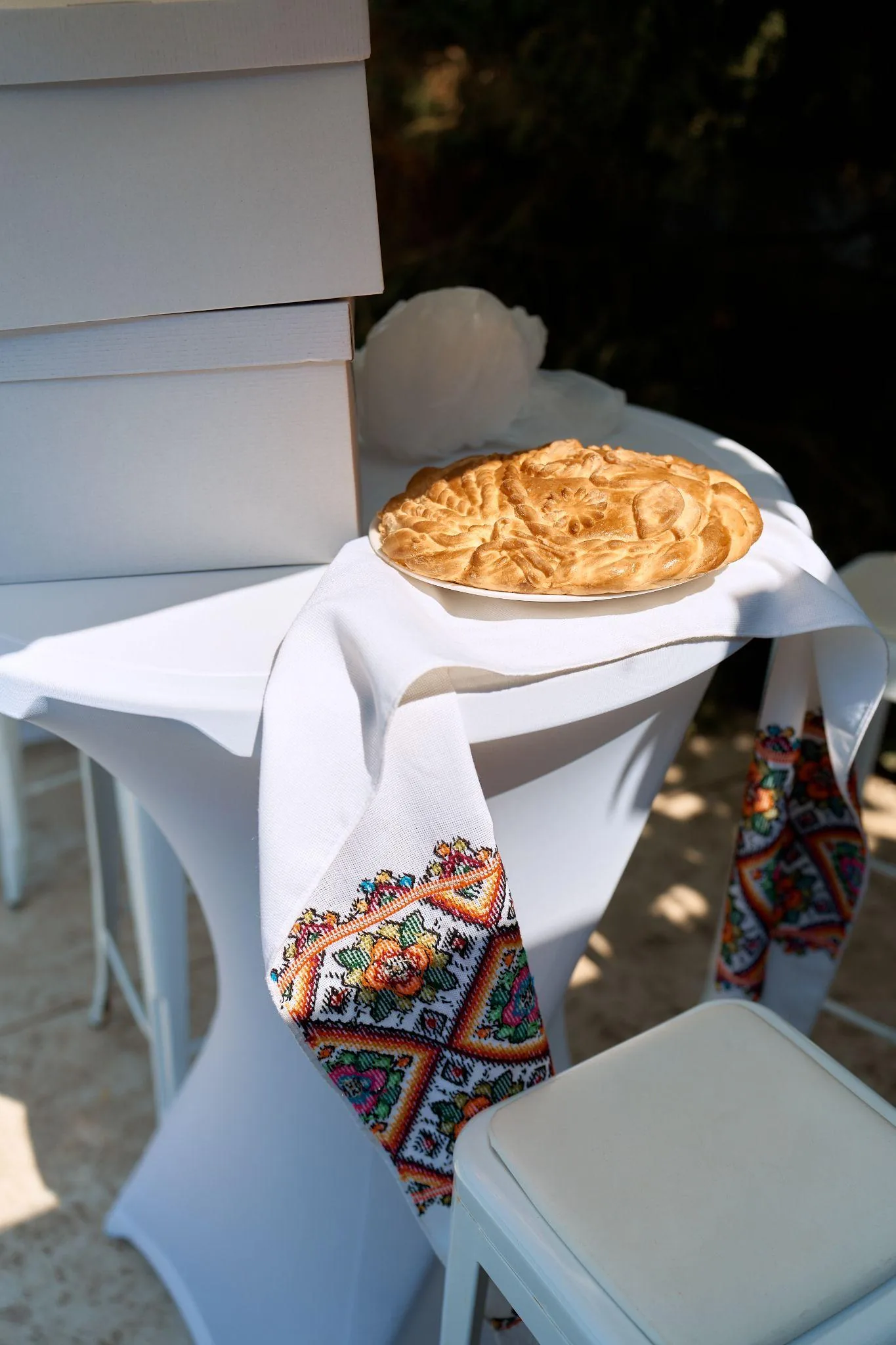
- Anya: We wanted to keep our families' traditions. For example, Nikita's parents suggested greeting us with a karavay. We specifically searched for one in Serbia. Our parents gave us a rushnyk and an icon.
- A week before the wedding, when we were all on holiday in Montenegro, we held a Buryat matchmaking ceremony. We rented a big house so our parents could meet and get to know each other. By tradition, my family had to pretend they weren't expecting guests. The parents exchanged gifts they had chosen themselves.
- Nikita: The ceremony is called "placing the khadak". The groom's parents come to the bride's family with offerings, exchange gifts, and voice wishes of prosperity for the future family. The table must be laid by the time they arrive. Meanwhile I sat off to the side and observed how handsome I was.
- You did without a host but invited a stand-up comedian. How did you organise the programme and entertain the guests?
- Anya: First we had an outdoor ceremony, roughly like in American films: I walked to the arch arm in arm with my parents, and Nikita and I exchanged vows.
- Nikita: We decided not to hire a host for the wedding. When there are a hundred guests at a celebration, it's clear why you need one: to gather everyone, entertain them, keep the programme on track. But we had 30 close people — I felt a stranger could only add awkwardness. So I took on that role myself. But I didn't stand there with a microphone all evening. I just occasionally announced what was next and kept an eye on the time.
- Anya: That evening I didn't have a groom at all, I had a bouncing host!
- We set up a board where guests wrote down when they wanted to congratulate us. Nikita shuffled the order a little so we could fit everything in before 10 p.m., while noise was still allowed.
- We danced, sang and had fun, then ate the cake, swam in the pool and gradually wound the celebration down. At midnight the transfer came for the guests. As soon as everyone had left, the house owners started cleaning up. We didn't have to do anything.
- How did you organise the guest transfer after the celebration?
- Anya: We booked three cars in advance, each for 7–8 people. At midnight they arrived at the venue. The guests told the drivers where to take them, and everyone who needed a ride was delivered right to their door. It gave me real peace of mind — that way I knew everyone got home safely.
- I think one car cost about 90–100 euros.
- Nikita: I'd say about seven to ten thousand dinars per car.
- Did anything not go to plan? How did you deal with the surprises?
- Anya: We wanted to play our own playlist through Spotify, but we had problems with the music. There was an iPad at the venue, but we couldn't log in to our account.
- Nikita: We tried connecting our phones with a cable, but something didn't work. In the end we just put on Serbian radio.
- There were problems with the sound too. The venue already had big speakers, so we didn't rent sound equipment. We only hired a keyboard, because some of our guests wanted to play. The microphone at the venue turned out to be broken. We had to find another one urgently. We found a company that rents out filming and sound equipment. I think they even sent us the microphone by taxi.
- Did you manage to stay within the planned budget? Which expenses turned out to be the biggest?
- Anya: Our budget gradually stretched. I heard somewhere the advice that you should add about 30% to the initial amount to get a realistic figure. I think that's roughly how it worked out for us.
- The biggest expense was the venue. My dress also turned out to be fairly expensive.
- The expenses weren't just the wedding. We also bought tickets for our parents, paid for their accommodation, went to Montenegro together before the wedding, and then took our parents to Tara.
- Nikita: And after the wedding we went to Montenegro again with Anya's friends. So it's hard to say which of that counts as wedding expenses and which is already the honeymoon. But overall we had enough money. We still have the shirts on our backs, so we stayed within budget.
While we were figuring out which tasks we could delegate, we were already getting them done
Choosing the venue
Some venues didn't want to make arrangements with us in advance. We wrote by email and on WhatsApp. I even called one place in January to discuss a wedding in July. They told me: "Call us in June"
Decor
Menu
Some 10–15 people couldn't say for sure whether they were coming until almost the day of the wedding. In the end they didn't come, although we had already budgeted food and drink for them. We literally had to reduce the order right before the wedding
Outfits
It turned out that getting into a salon isn't always easy. Often the appointment was a week or two away, sometimes three. In some salons a second fitting cost 100–150 euros, and in some places you weren't allowed to take photos in the dresses
A dress rental is for a set number of days. If you return it later, you have to pay extra
Makeup and hair
At the trial the makeup and hair turned out so well that I even thought: I wasted the money, I could have just trusted Masha on the wedding day
Bouquet
Photographer
Some people simply wrote "I'm a photographer" but didn't show any work. And their prices were sometimes even higher than those of the people whose portfolios we liked
Traditions
Host
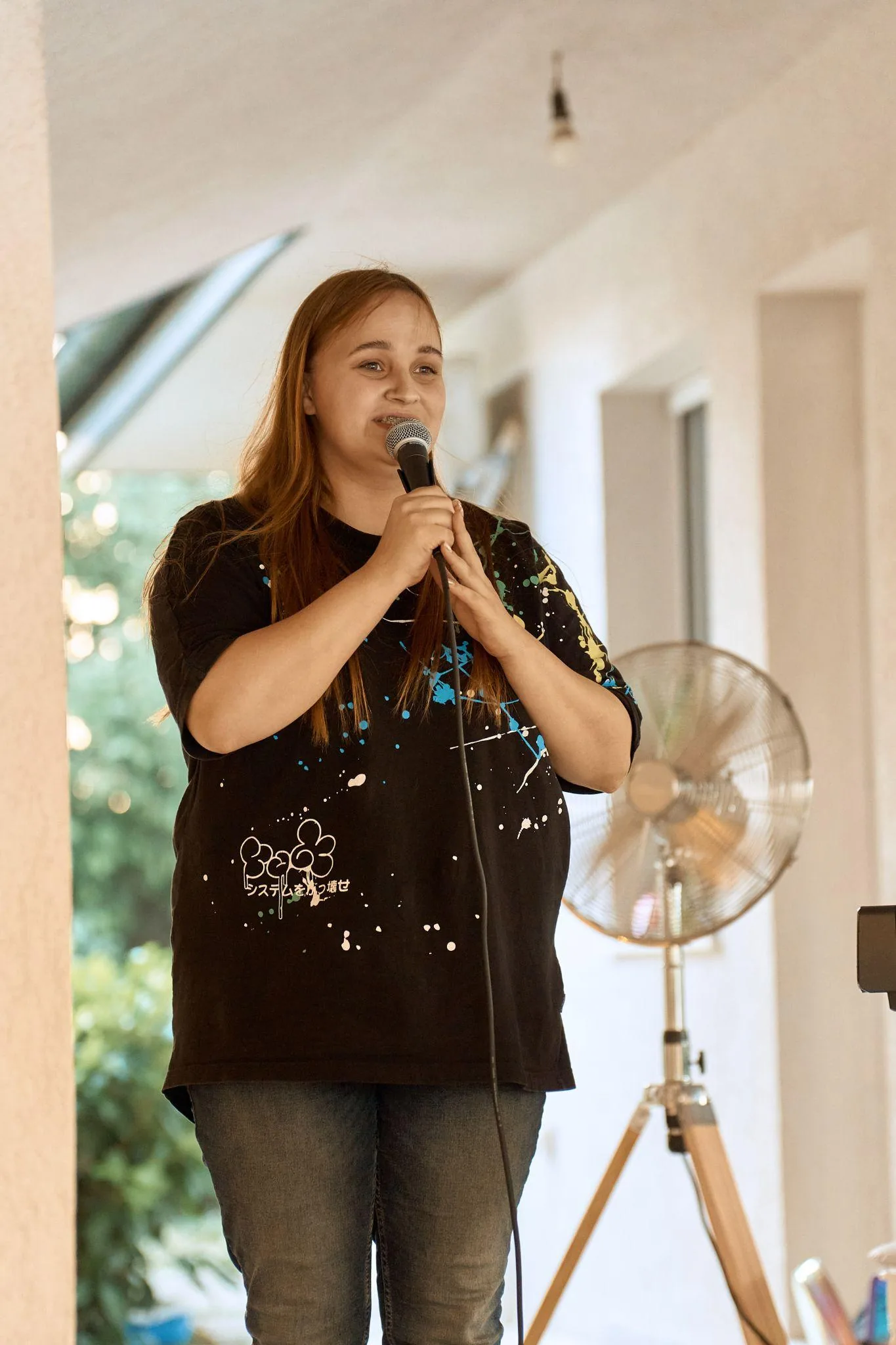
We also invited a stand-up comedian. It didn't turn out quite as we expected: some of the jokes didn't land with the older guests
Guest transfer
Problems
| Service | How much it cost |
|---|---|
| House rental for one day | 1,100 euros |
| Decor | About 350–400 euros |
| Catering including food and cake | 135 thousand dinars |
| Wedding dress rental with accessories | 800 euros |
| Groom's made-to-order shirt | 100–120 euros |
| Wedding photography | About 600 euros |
| Makeup and hair for the photo shoot and the wedding | About 410 euros |
| Guest transfer | About 90–100 euros per car, three cars in total |
| Help booking the consulate appointment | About 100 euros |
The couple's prices for their own celebration for 30 guests are a guide, not a price list: they depend on the venue, the season and the number of guests
- Are you glad you decided to organise the wedding yourselves and hold it in Serbia?
- Anya: I think it's perfectly realistic to organise a wedding here yourselves. There were sometimes difficulties with communication: not everyone replied quickly, and we had to remind people about ourselves. But on the whole everything got sorted out.
- Nikita: I think it helped that we started preparing 8 months in advance. There was time to calmly look for options, negotiate and change things. At the same time, back then we didn't speak Serbian very well yet, but we still found common ground with the locals.
- Anya: What I like most is that we held the wedding where we live now. Our parents and close friends came to us, saw our city, our favourite cafés, the places we go every day. I think when someone sees your everyday life, they get to know you better. For us the wedding was also a chance to show our friends and parents how we have settled in here.
I'm glad we chose early July. It's the season of fresh berries and fruit, so there was plenty of delicious food on the table. And we were lucky with the weather: it was warm, but without exhausting heat